
10 Dec Costa Rica 2025

SAYFC International Travel Report – Costa Rica
Jean Andrew (Beith & District YFC), Eva Baillie (Biggar YFC), Joe Cameron (East Kilbride YFC), Craig Cochrane (Crossroads YFC), Selina Gordon (Kinneff YFC), George Sinclair (Edinburgh JAC), Sophie Stockwell (East Fife JAC), Megan Osbaldstone (Bankfoot JAC)
Monday 10th November
After a late-night arrival into San José on Sunday, Monday became another full day of travel. We started the morning with breakfast at a local cafe, where some of us sampled the traditional Costa Rican gallo pinto—rice and beans for breakfast.
Once we’d eaten, it was time to begin our seven-hour public bus journey, winding through the hills and then along the coast toward Puerto Viejo.
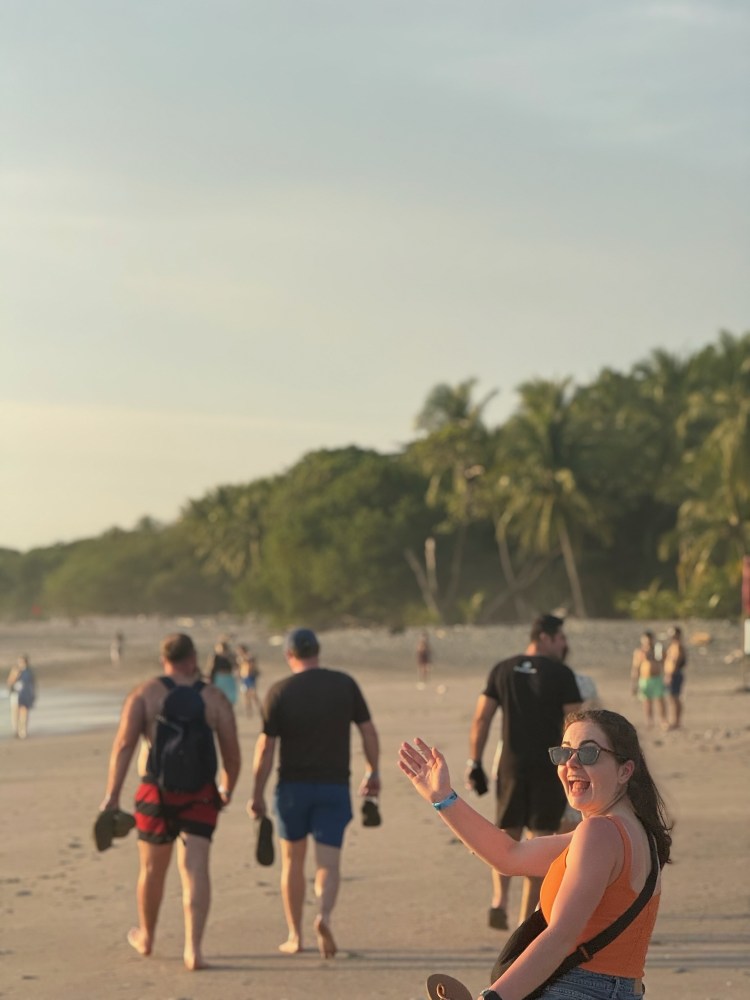
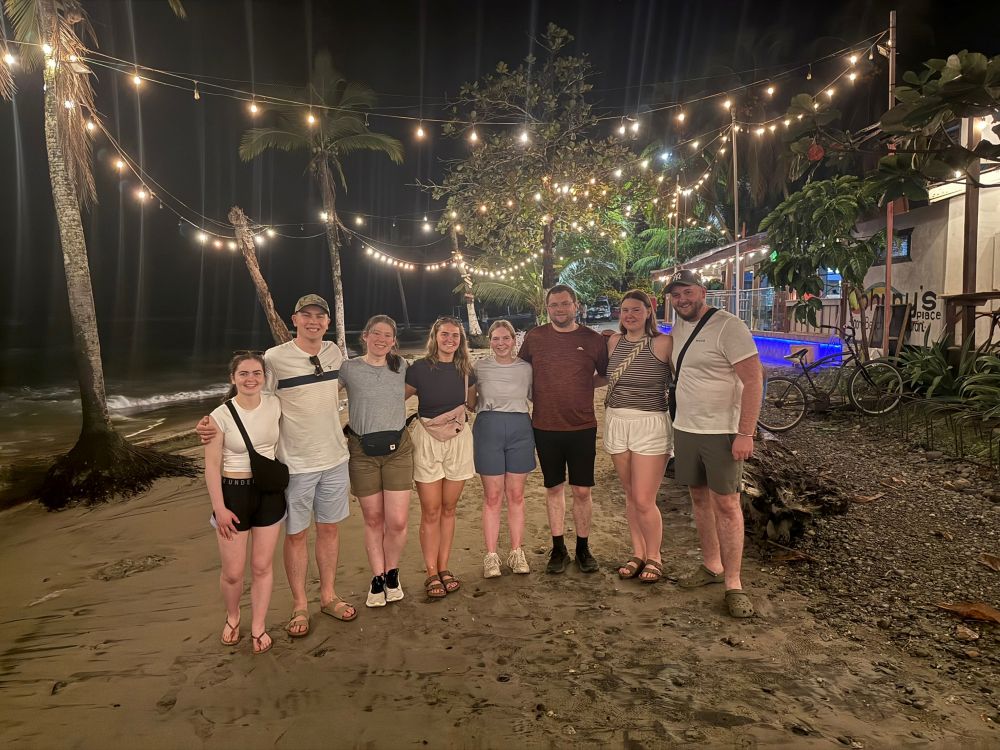
Once we arrived in Puerto Viejo, we headed out for a short walk just as the sun was setting, through the village. Dinner followed at a local restaurant, Chile Rojo, before everyone called it an early night after two long days on the move.
Tuesday 11th November
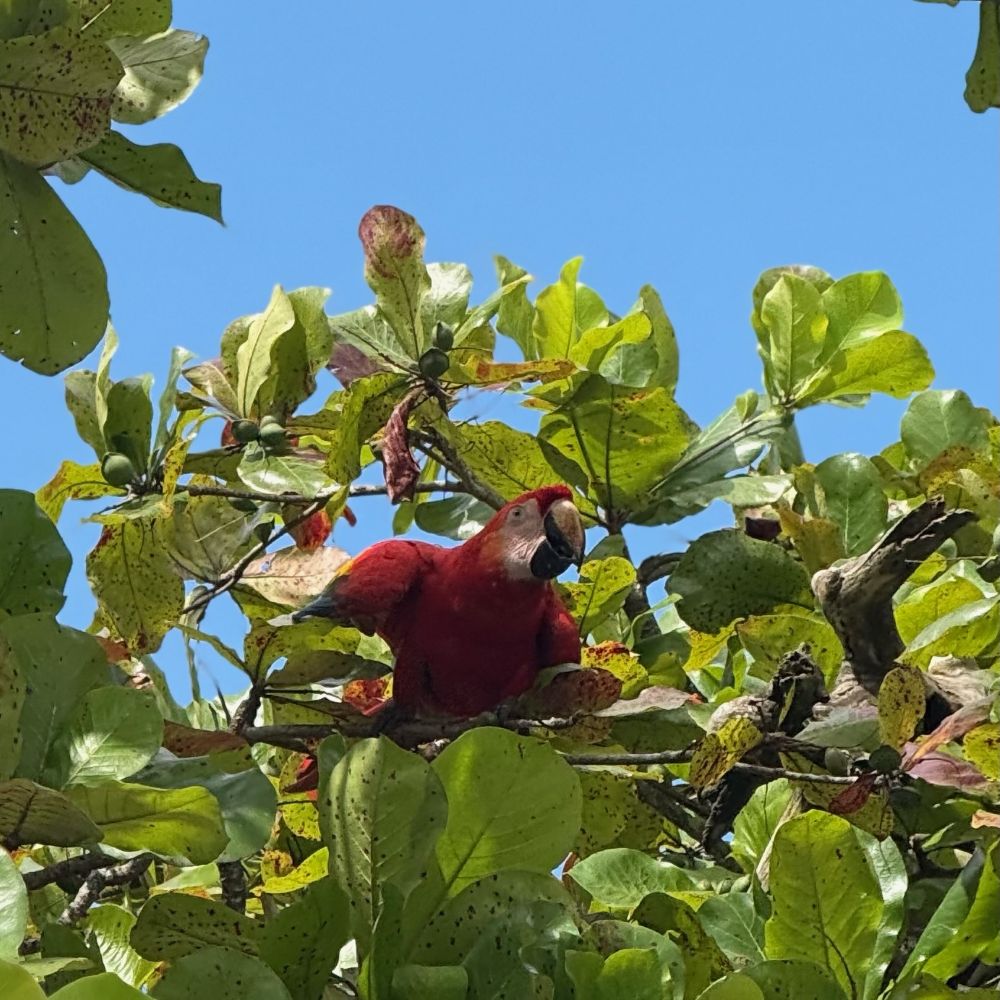
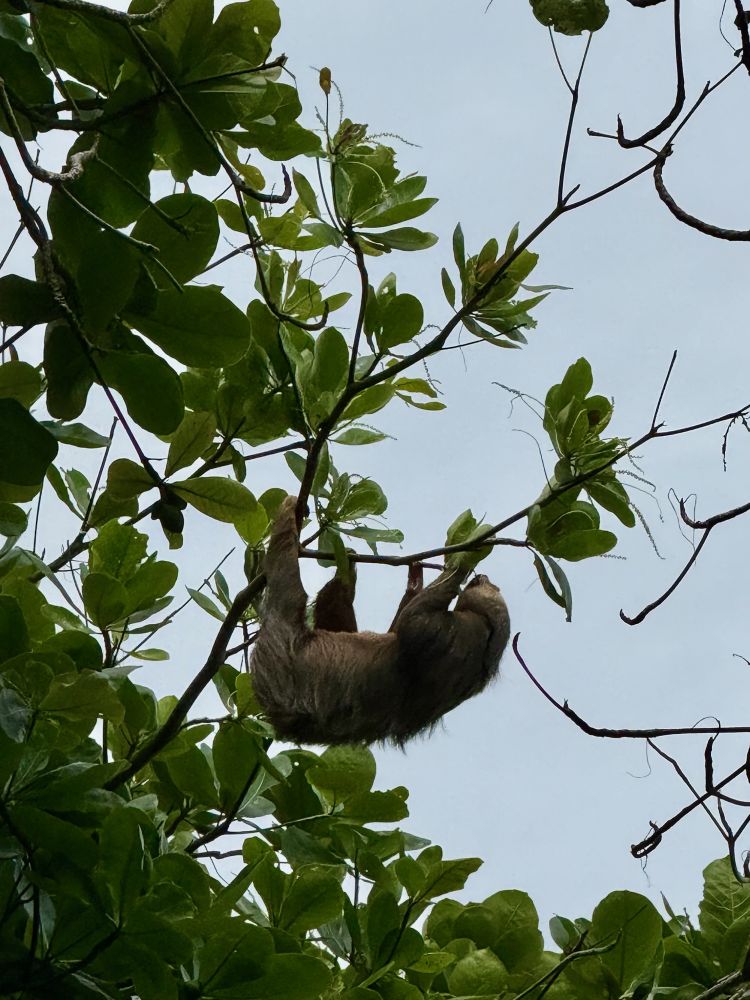
After breakfast, we headed off to the Gandoca Manzanillon National Wildlife Park. This was our first real experience of Costa Rican wildlife, seeing many sloths, butterflies, racoons and hearing howler monkeys. The wildlife park was home to many endangered species and over 360 bird species. It was amazing to witness and got us really excited for what was to come over the next couple of weeks.
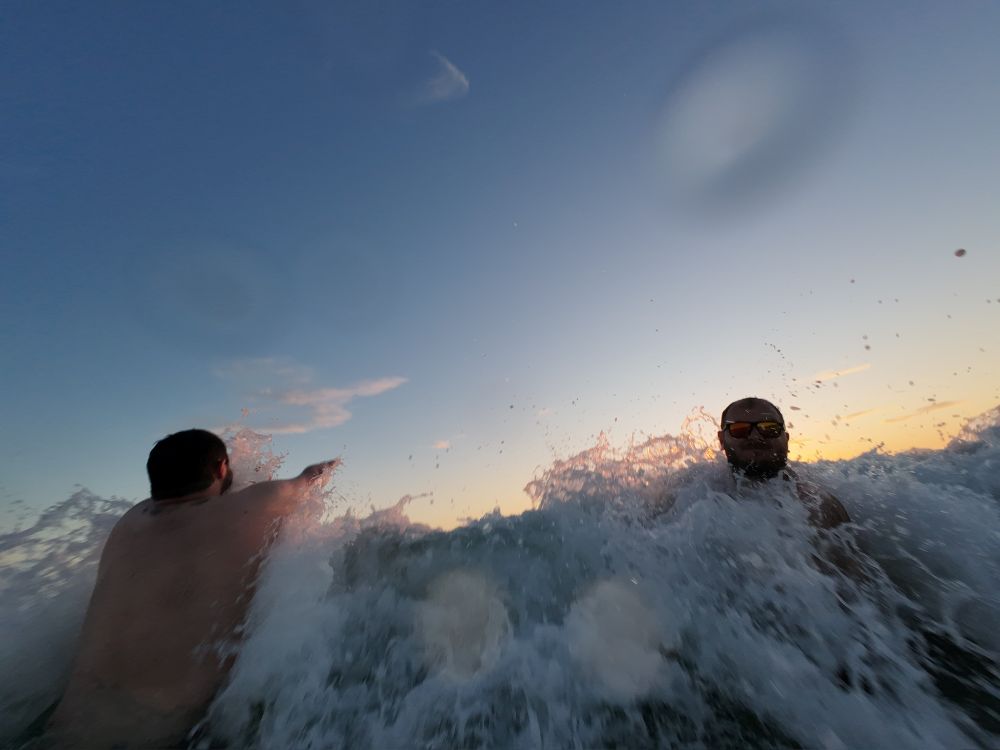
Once returning to the local town, we headed for a swim. Having a great time, enjoying the warm sea water! We then headed for dinner, enjoying our second night in Puerto Viejo we witness some local dancing where our very own group leader Craig gave is a good bash at some belly dancing!
Wednesday 12th November
Overcast and wet – you can take the young farmers out of Scotland but sometimes the weather follows. Today was our final full day in Puerto Viejo and following breakfast we received an apprehensive text from our guide Roy asking if we still wanted to go ahead with the planned bike ride. After a brief discussion we all agreed, we still wanted to go ahead; not a lot would get done at home if little rain held us back, and it’s not too bad when the rain feels like a warm shower.
We hired some local banana bikes; handy 2-wheelers with one gear and no ‘brakes’ – all pedal power – pedal to go forward and pedal back to stop. They proved to be a very popular mode of transport in the flatter areas of the region, and we all enjoyed the exercise cycling to Punta Uva beach down the coastline.
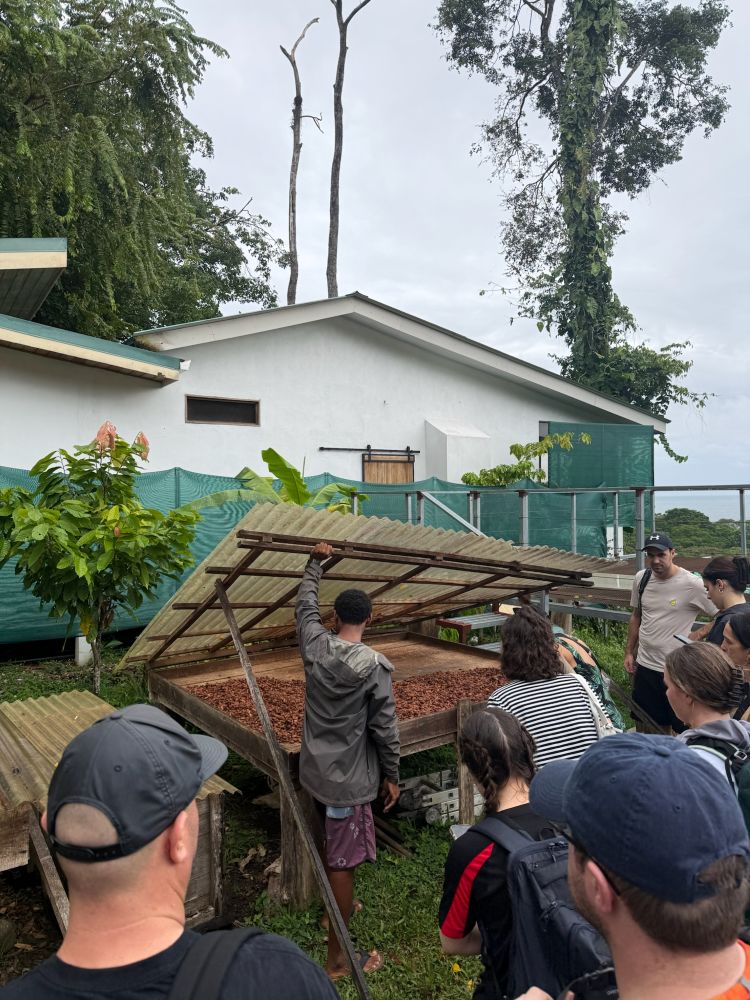
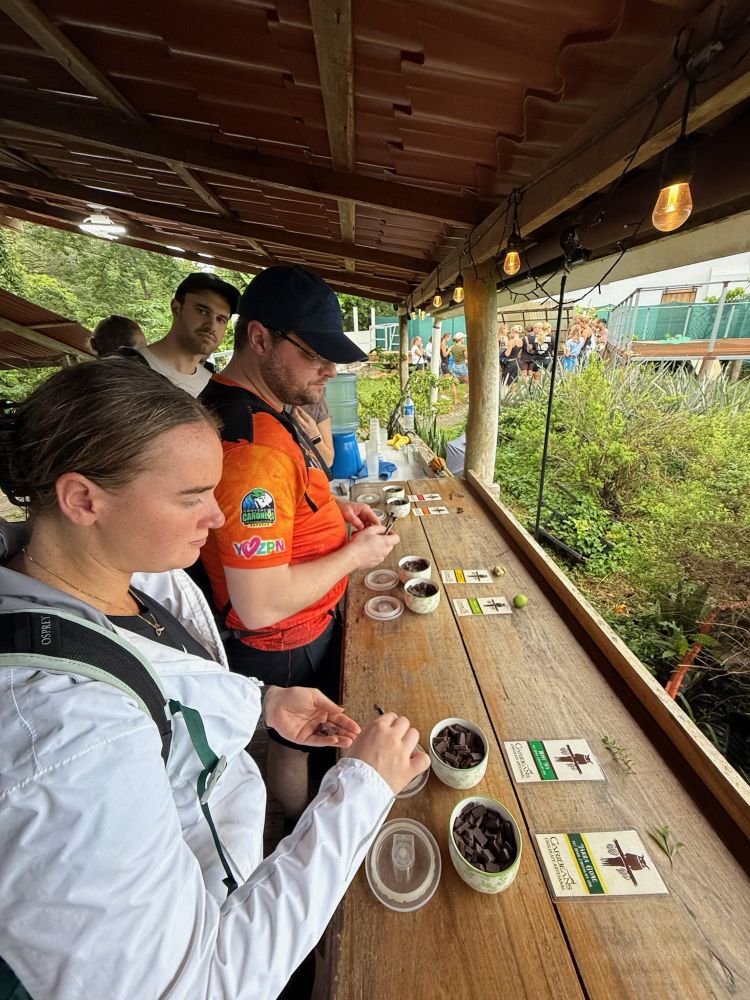
After a swim and some lunch at a local restaurant we headed back toward Puerto Viejo stopping in at Caribbeans Chocolate and Coffee for a chocolate farm tour. We learned the area was historically the chocolate coast; the cacao trees thriving in the fertile soil, and producing the cacao pods used in chocolate production. Costa Rica’s history with cacao stretches back as far as 1500 BCE where it was used by the indigenous, and then with colonisation from Europe became a more renowned product through trade. Different pressures influenced the cacao market over the years, including the popularity of coffee as well as other commodities, but in the 1970’s a fungus became widespread impacting crops and spoiling fruit. As there were no known resistance or chemical control available, growers were forced to adopt cultural management practices to prevent the fungus spreading. This meant that more labour was required for production and it negatively impacted cacao production across the country.
After learning about the production of cacao pods, we then progressed to learning about the chocolate production. Firstly, after the pods are ripe and yellow, they are harvested so that the beans inside can be collected. The beans are then left in large tray tables under plastic to ferment for about a week, and then dry, to improve the otherwise bitter flavours of the beans – it was interesting to learn that each cacao farmer has their own preferred method of doing this, often a family secret. From there the beans are roasted to improve the flavour before being dressed to remove the separate the bean husks and the cacao nibs. The nibs are then combined and ground for a long period of time to created pure chocolate – no other ingredients required – but components such as sugar and other flavours may be added to taste. Finally, the chocolate is tempered to give it the iconic shiny and solid chocolate that is poured into a chocolate bar mould.
Safe to say we all walked away with a sample of the local chocolate!
Thursday 13th November
We had an early start today; boarding our chariot for the day at 7am. A brief stop for breakfast at a service station buffet set us up for the remainder of the 5hr trip to Coope San Juan near San Carlos. Some of the group were more adventurous than others in choosing from the selection of local and traditional foods including various forms of egg, sausage and cheese.
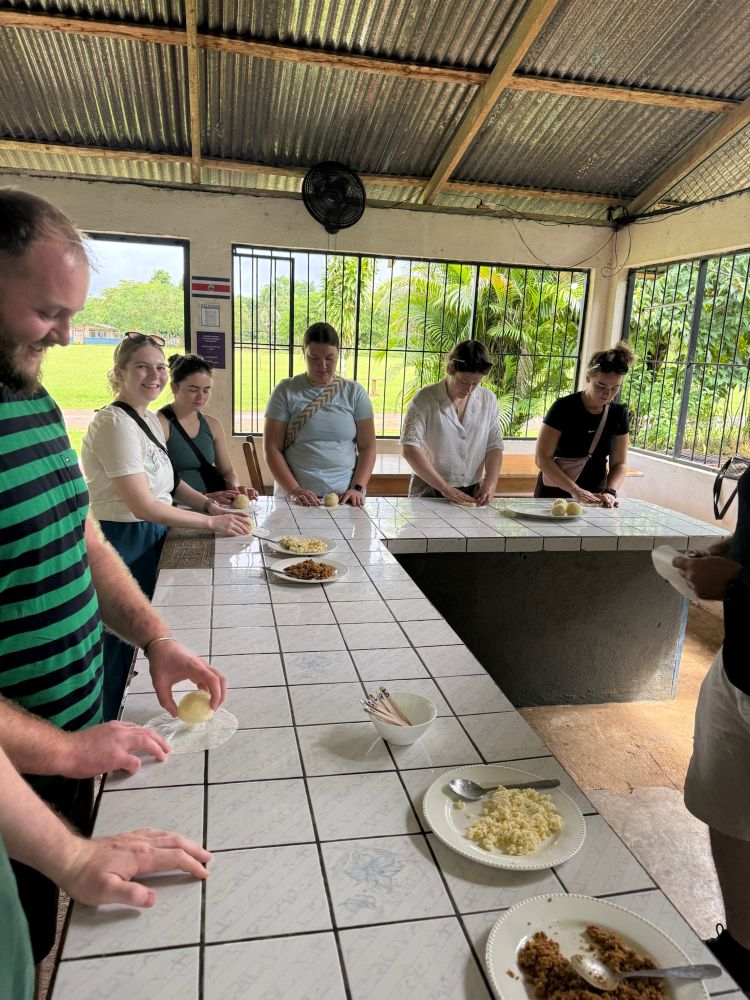
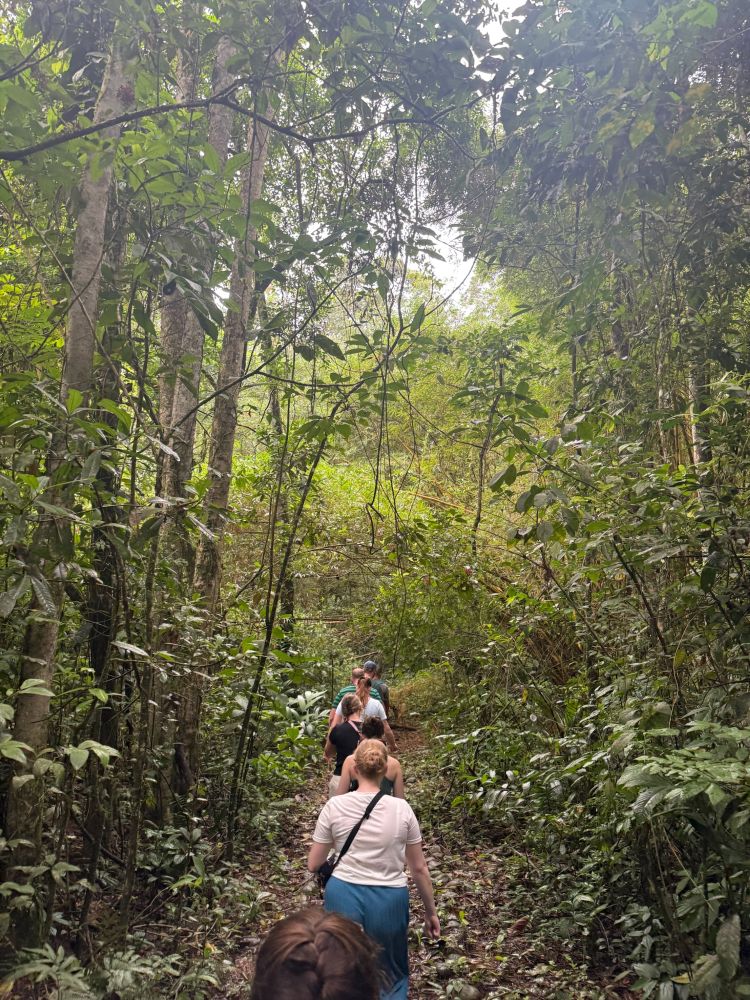
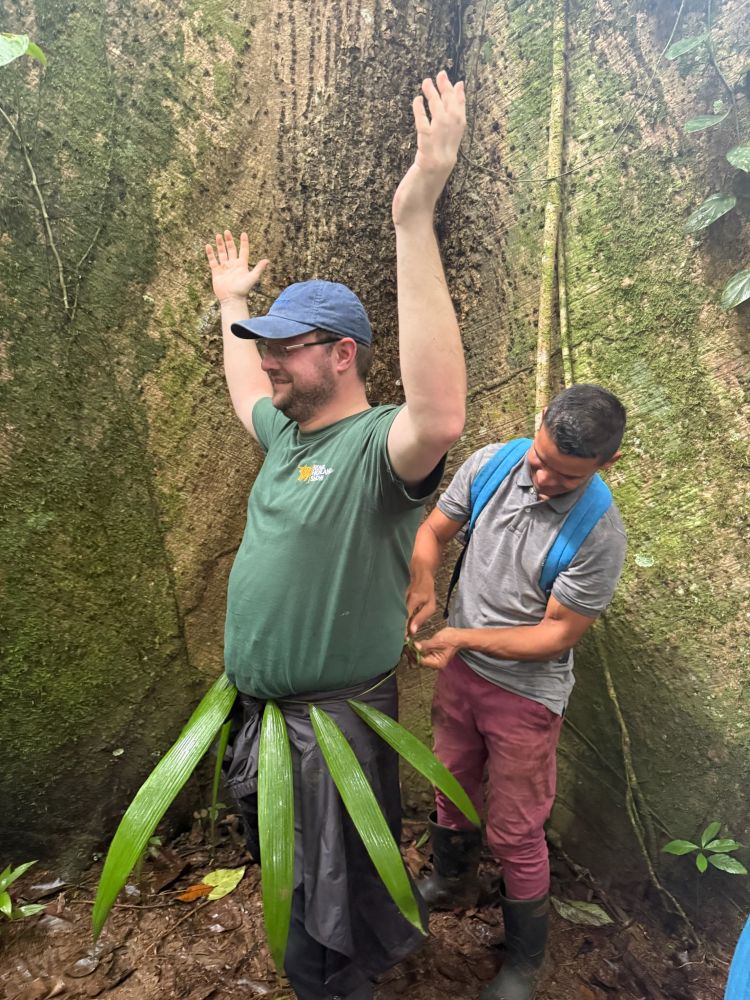
Coope San Juan is a small community that has benefitted from significant investment by G-Adventures through their Planterra programme. We arrived and were straight into an interactive cookery demonstration; each making our own Enyucado out of locally grown Yuka (a vegetable similar to a potato). We were then split into 2s and 3s before being introduced to the local family we would spend the night with. As many of the residents of Coope San Juan don’t speak much English, we had the opportunity to try out our Spanish. “Me nombre es Joe. E vengo de East Kilbride.” After getting settled into our accommodation, we reconvened and joined a local guide for a highly entertaining trip through the rainforest (complete with very authentic rain!). We made our own bowls and spoons out of bamboo; saw some very angry bullet ants; and (some of us) even tried eating some termites. Once we had all dried off, we enjoyed a lovely meal of local dishes prepared by our hosts. We tried dishes including plantain ceviche, rice, beans, chicken, tortilla and drinks made from various fruits.
Friday 14th November
On the Friday, we enjoyed an authentic Costa Rican breakfast before setting off for our next destination, La Fortuna. Once we arrived, we settled into our accommodation and had a relaxing lunch. Later in the early evening, we visited the local hot springs — one of the highlights of the entire trip. It was incredibly relaxing to experience the different temperatures of the various pools, and unsurprisingly, we spent most of our time in the pool socialising!
Saturday 15th November
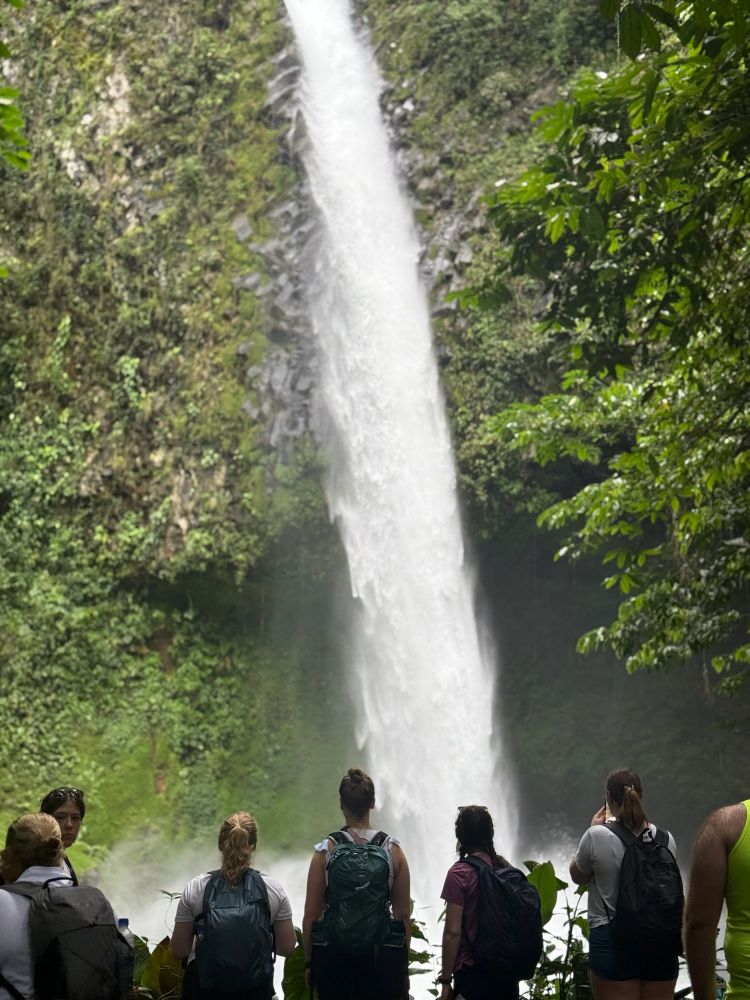
On Saturday morning, we all headed down to the local bakery where we enjoyed all the fresh pastries. After we visited the local La Fortuna waterfall, it was great to see such an amazing view. We endured roughly 500 steps down to the waterfall, taking around 30 minutes on the way back up! The waterfall is 75 metres high and we were able to enjoy the nice cool pool of water at the bottom.
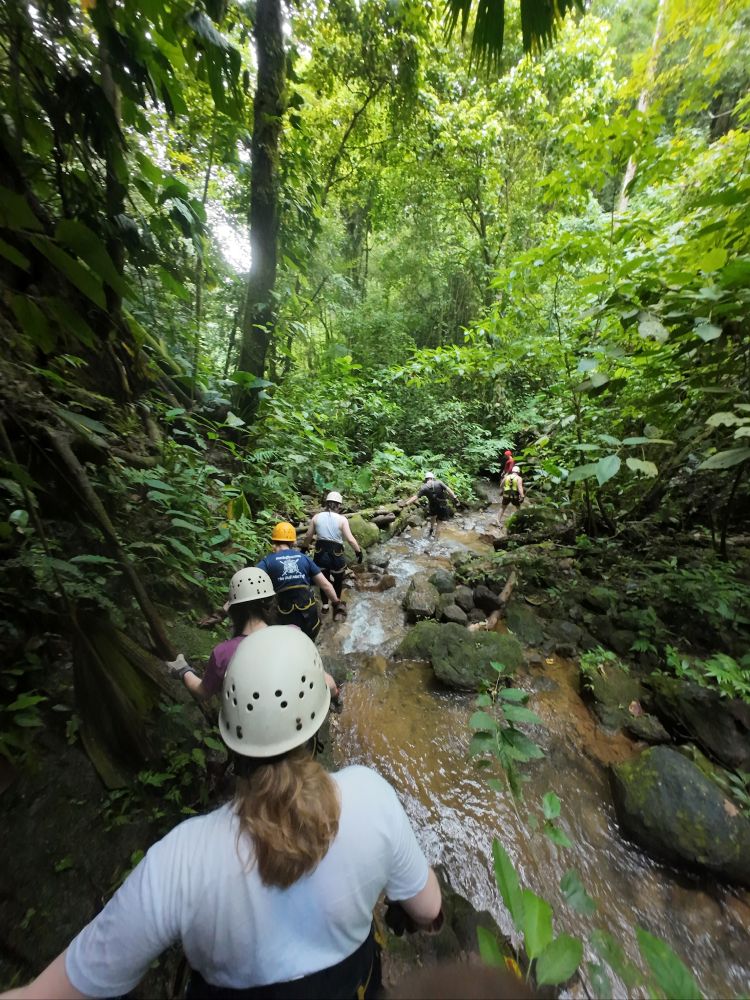
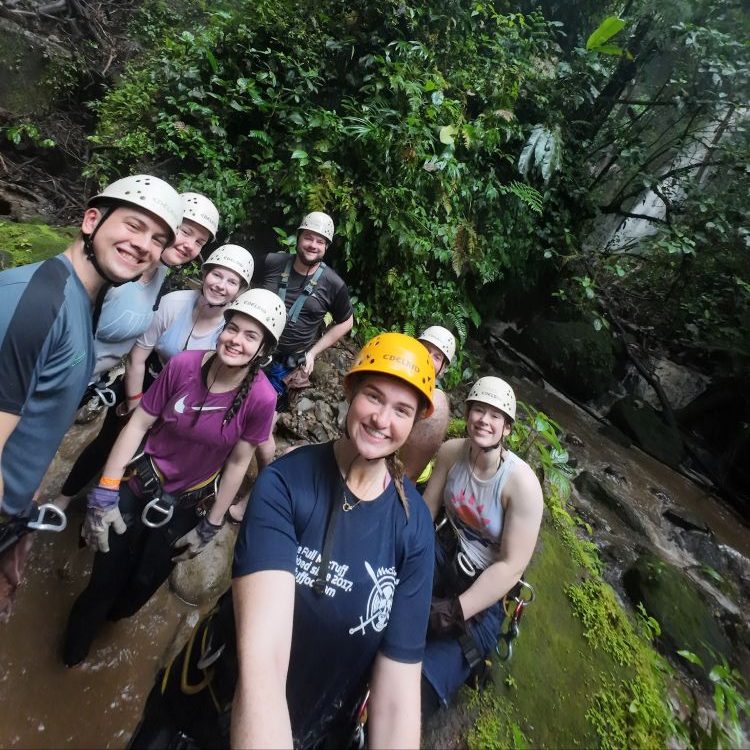
In the afternoon, we took part in a canyoning trip. This was great fun and an incredible experience. It pushed some of us out our comfort zone and we got some great action shots on the go pro! That evening, we went for dinner and enjoyed our last evening in La Fortuna.
Sunday 16th November
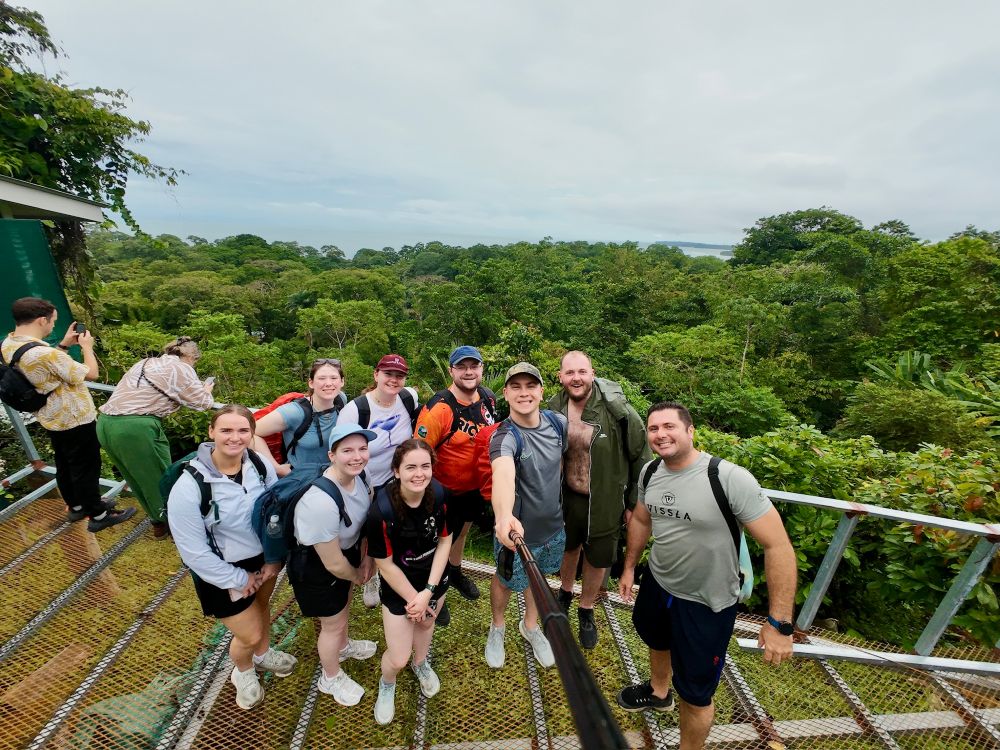
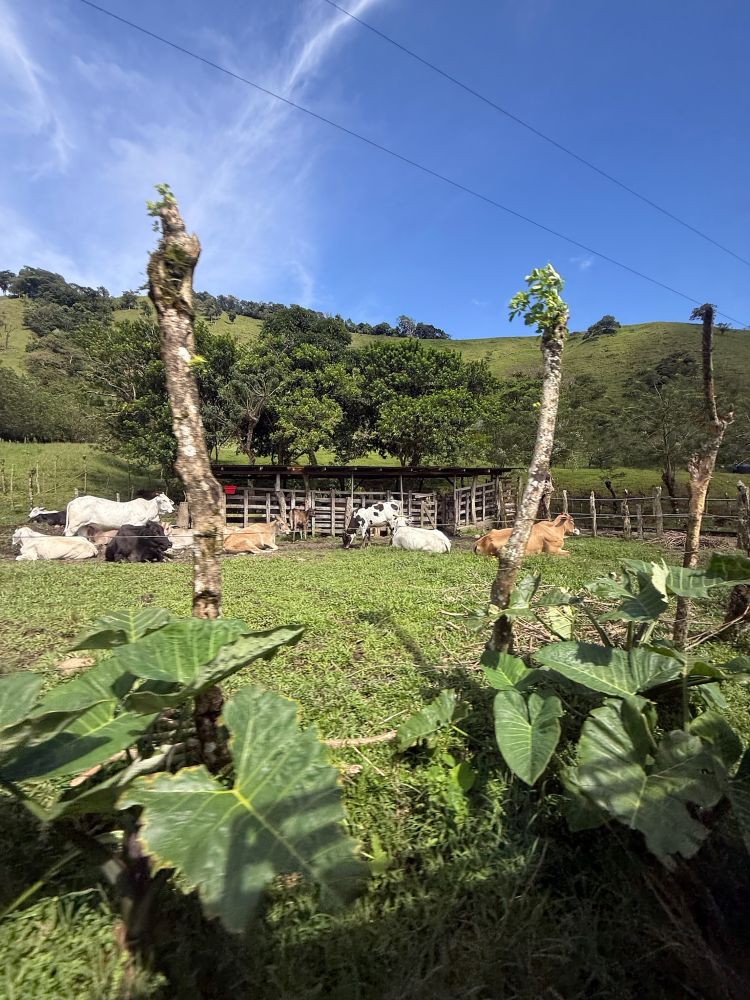
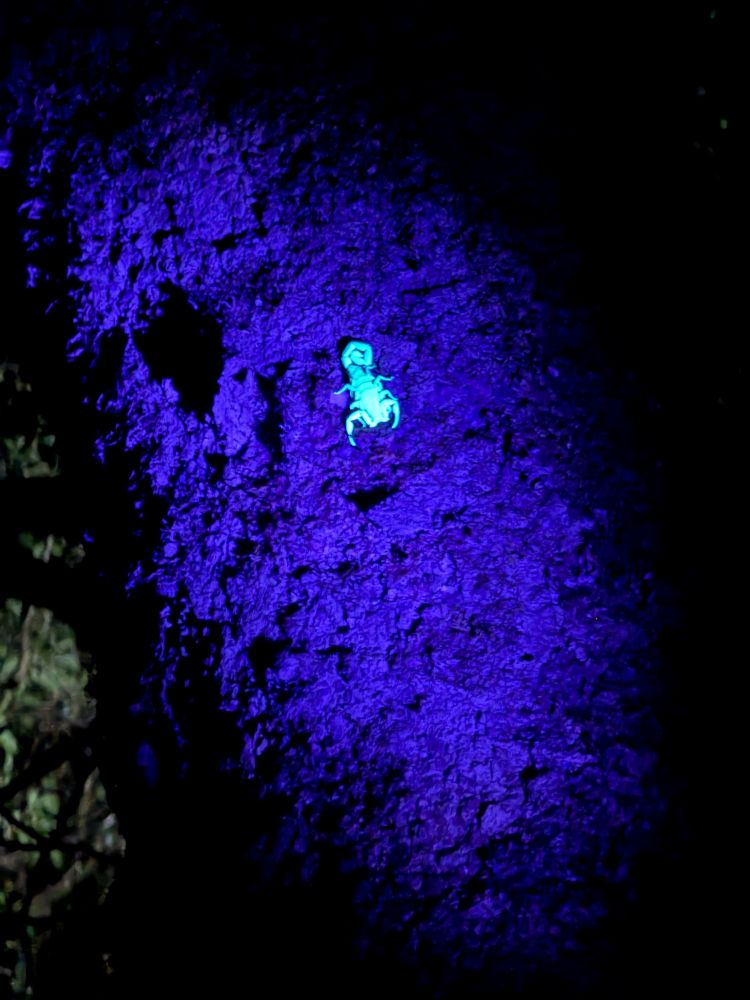
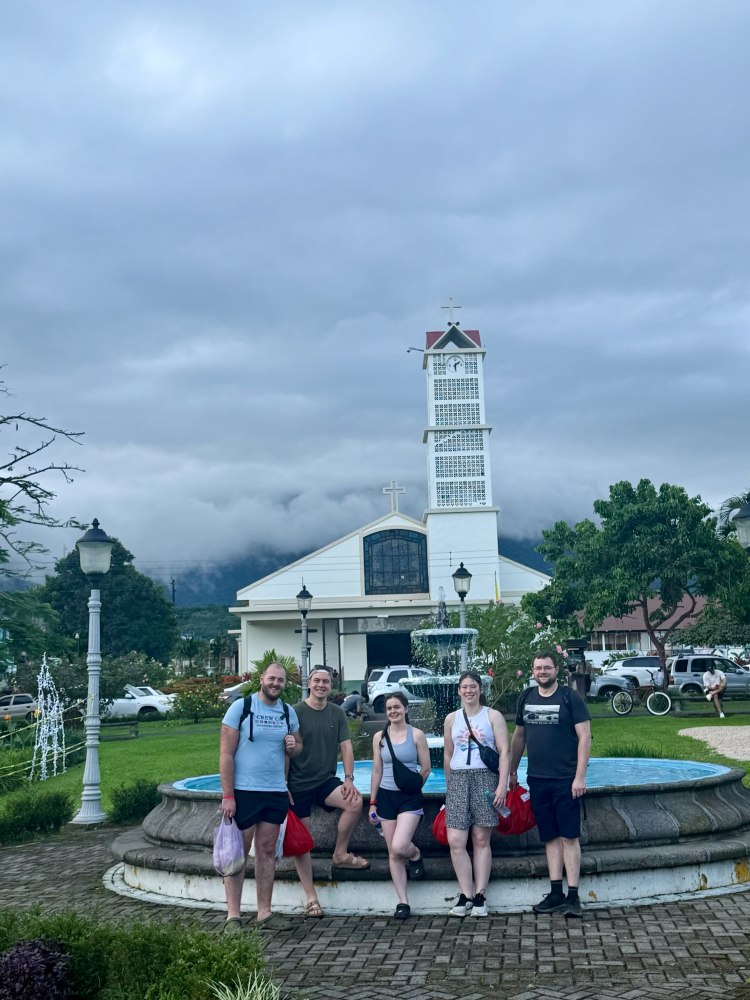
Sunday seen us travel from La Fortuna to Monteverde. It was an early start for breakfast and then onto the bus on our way to the boat. The boys took a liking to the fence posts which struck a debate as to whether they were wooden or concrete. It’s fair to say boredom had taken over at this point of the journey! Once we had figured it out, we were on the boat crossing the water to reach the mountains, an hour later we were back in the bus and on the winding roads up the mountains. A quick pit stop and a group photo before we hit Monteverde. We had a quick recharge at our new home for the next couple of nights before heading out in the dark for a moonlight walk. We had the chance to see many interesting animals such as sloths, tarantula, glow in the dark scorpion and some snakes. After a wander around we headed back to the village for tea before calling it a night ready for another early start for an eventful day!
Monday 17th November
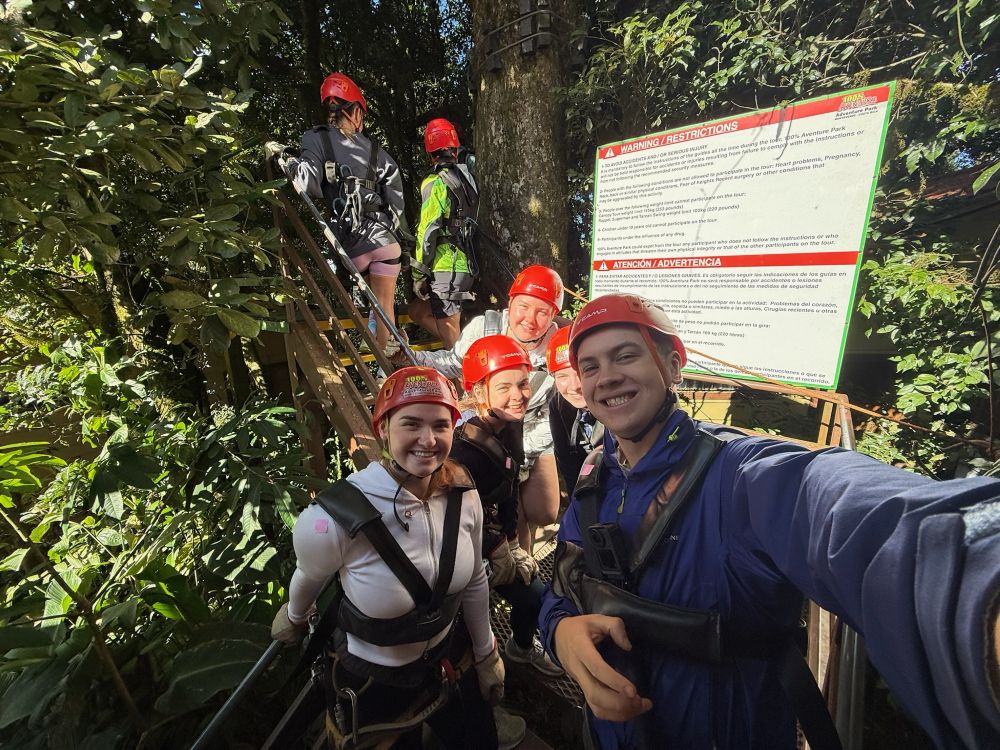
On Monday, we had an adventure packed day! We started the morning off by heading to the Aventura Monteverde Ziplines. This is one of Latin Americas longest ziplines at 1,590 metres, over 5,220 feet. It included 12 ziplines to go on and a 40-meter Tarzan swing, which only some of us were brave enough to go on. It was a great experience and we all thoroughly enjoyed ourselves.
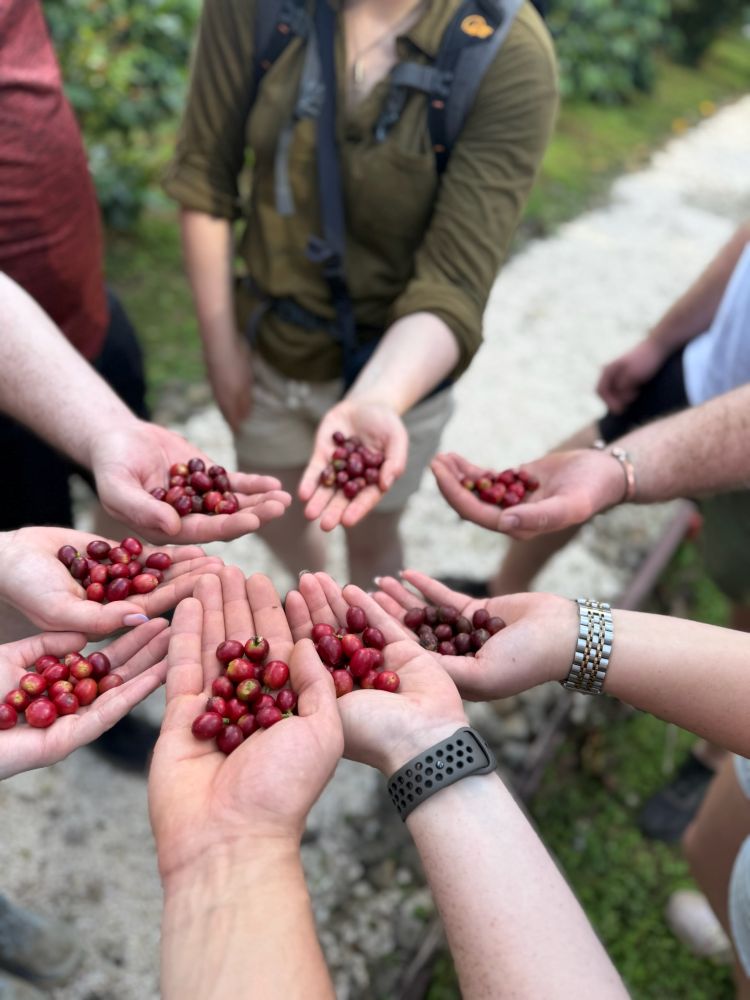
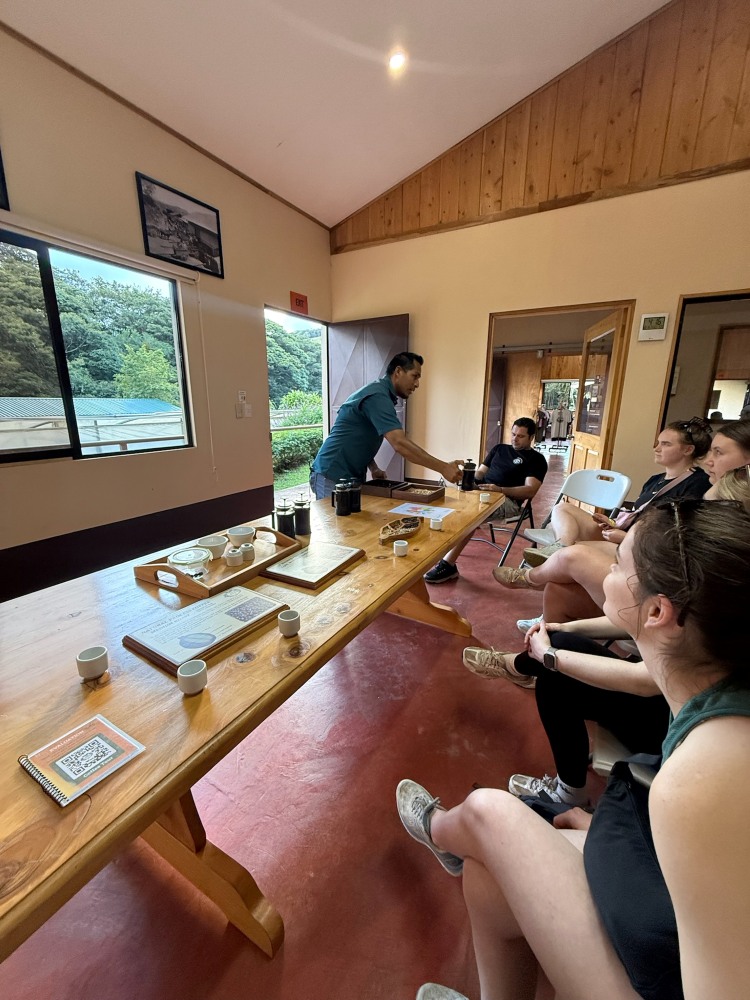
After a quick stop for lunch, we headed to the local Monteverde Coffee Plantation. Here we learned all about the growing of coffee beans, watched how the beans are prepared and observed the drying and roasting process. We then were able to try the different varieties of coffee. Visiting a coffee and chocolate plantation farms during our time in Costa Rica was informative and highlighted a main source of income for Costa Rican farming families.
Tuesday 18th November
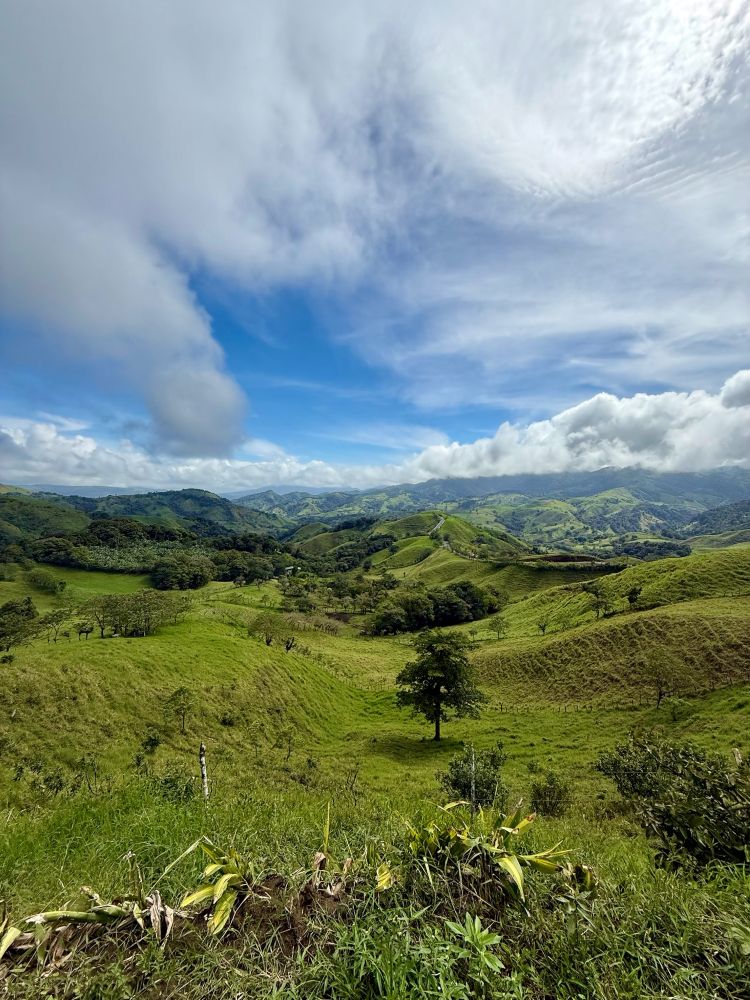
On Tuesday we said goodbye to Monteverde and proceeded to travel west through some very scenic upland hill roads towards our destination of Santa Teresa. Green and expansive with very steep terrain summarised the area well – but it was not only a beautiful view. The area we travelled through was referred to as a ‘blue zone’; there are only a handful of these areas recognised throughout the globe, with Okinawa in Japan, and Sardinia in Italy being examples.
Blue Zones are recognised for having large populations of people who live not only healthier but also longer lives. While this is down to many factors, in Costa Rica, this has been attributed to healthy lifestyles, happier more stress-free people and the abundance of fresh food. Thanks to the country’s proximity to the equator, Costa Rica has a much broader growing seasons, meaning fresh produce is available for larger parts for the year, but also allows for a great range of crops and foodstuffs to be produced. We had noticed throughout the trip so far just how fresh – and tasty – a lot of the food was; fresh fruit such as mango, banana, pineapple was common, and plantain (a type of savoury banana-related fruit) was a large staple of many plates (like potatoes at home).
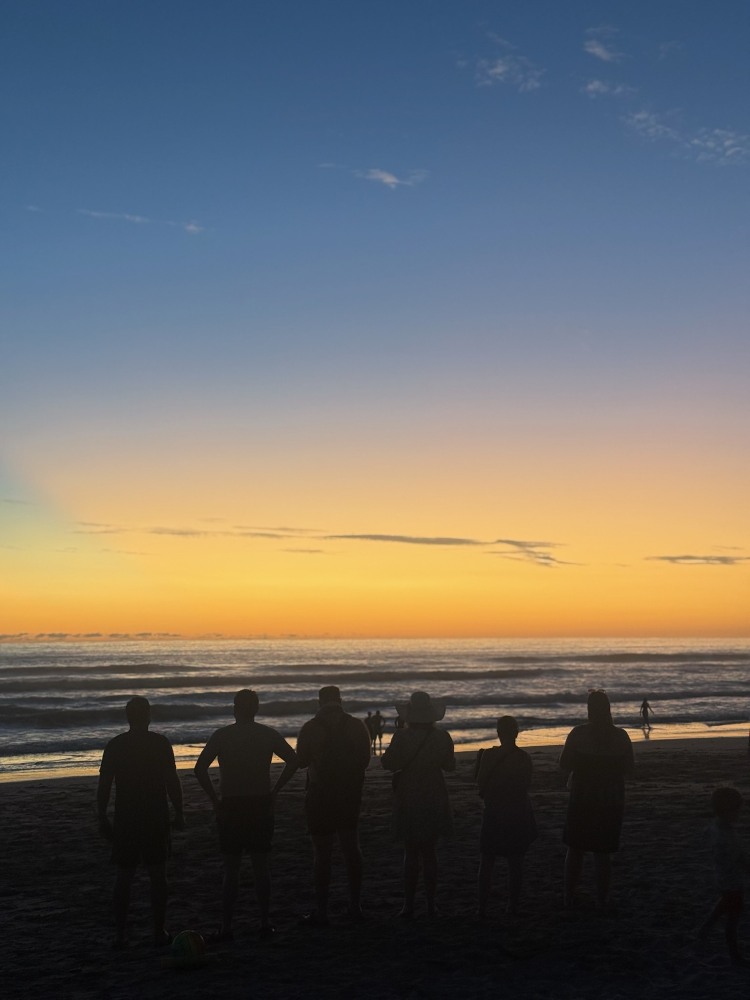
We took a large ferry to cross the Gulf of Nicoya and after another taxi journey, made it to Santa Teresa. After unpacking at the hostel, we were fortunate to catch the sunset on the beach – the western facing nature of the coast certainly made for an impressive display as the sun disappeared on the horizon.
Wednesday 19th November
Today was a much-needed rest day. With no formal activities planned we took the opportunity to relax and explore the local area. We made use of the pool at the hostel and swam at the beach before heading for a casual dinner at a local Soda (small restaurant/cafe) recommended to us by our tour guide Roy.
Thursday 20th November
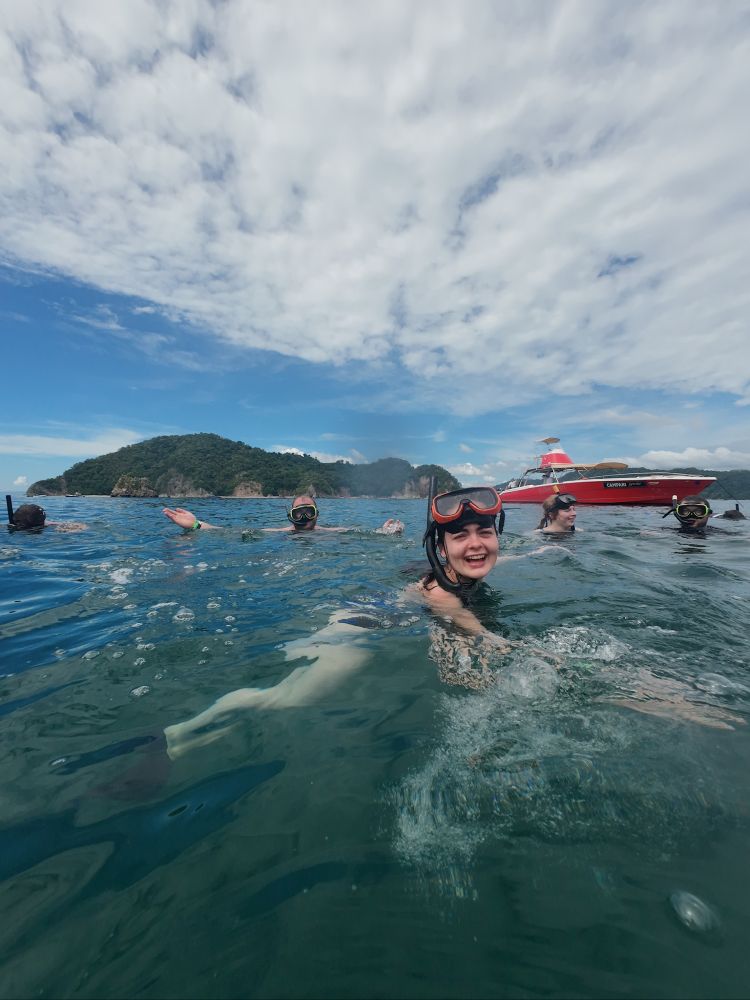
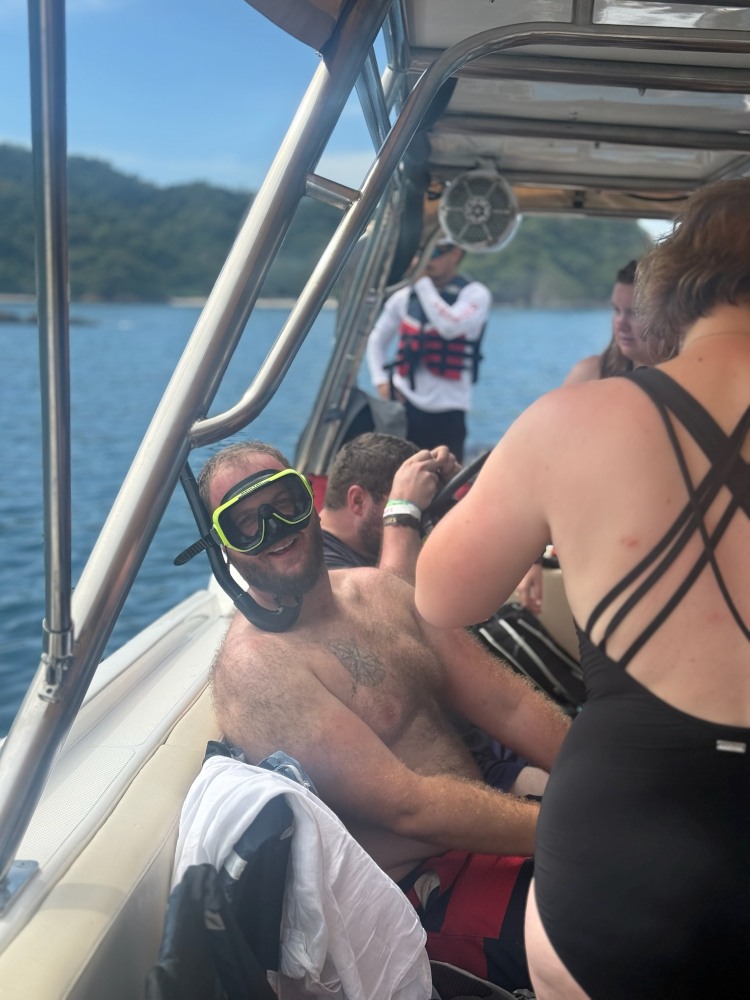
Today was our snorkelling and bioluminescence tour. We began early, heading out by speedboat to our first snorkelling spot. After a few minutes of getting used to breathing through the snorkel, we were all beginning to spot some fish.
Next, we moved on to a second snorkelling site, where there was a much more impressive variety of sea life. We even came across a few starfish resting on the ocean floor. After a couple of hours in the water, it was time for lunch on Tortuga Island (Turtle Island).
We had three hours to spend there, most of which ended up being filled with friendly—if not particularly skilled—games of beach volleyball with other tourists.
After plenty of fun, we hopped back on the speedboat for a ride along the coast, stopping at another beach where we enjoyed cocktails as the sun set. Once darkness fell, we headed back out to sea to experience the bioluminescence.
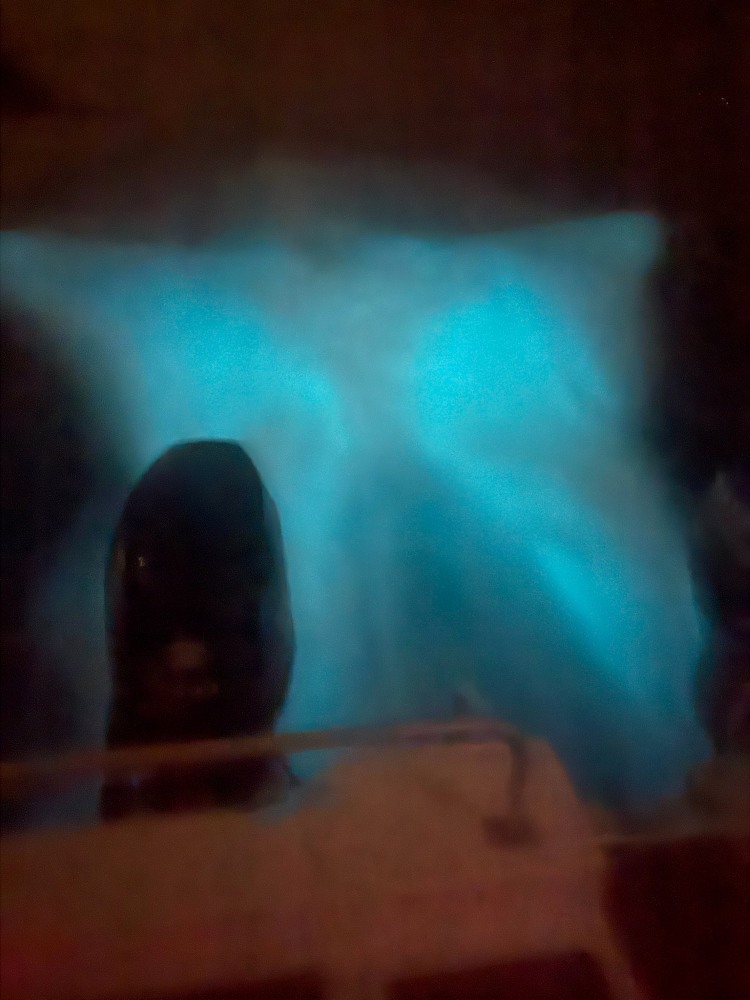
Bioluminescence occurs when luciferin and luciferase react with oxygen to produce light. Everyone got back into the water, and as we moved, the oxygen we released caused the water around us to glow like thousands of tiny stars—an unforgettable sight.
Finally, we returned to the hostel for pizza. It was the perfect relaxed evening after such a busy, incredible day out at sea.
Friday 21st November
On the following Friday — our final day — we travelled back by bus to the capital city, San José. We started the morning by stopping at a local bakery to pick up some treats for the journey. Later in the afternoon, once we had arrived back at the hotel, we headed out for our last dinner together to thank our tour guide, Roy, for everything he had done to give us the best possible experience in Costa Rica.
Reflecting on the trip, it truly was an unforgettable experience from start to finish. Every day offered something new — whether it was tasting local food, exploring beautiful landscapes, or simply enjoying the company of the group. The warmth of the people, the richness of the culture, and the incredible natural beauty made the journey even more special. Looking back, it’s clear how much we learned, experienced, and appreciated, and we’ll always treasure the memories we made throughout our time in Costa Rica.